
Entering the Desert
As expected, the Scottish Episcopal Church has now suspended all public worship until further notice. For local congregations, this means that we must find new ways of maintaining our life as a community of faith by offering care, support, prayer and worship in ways that will draw on all our creative resources.
Many have commented that, especially as we’re already in the time of Lent, we are entering a spiritual desert, by which I mean that we are entering a privileged place of spiritual opportunity, a place of interiority and trust, a place where external characteristics of religious observance are largely stripped away. Our spiritual ancestors knew this place well and we can still draw on their wisdom, whether it’s the monastic pioneers of the deserts of the Middle East, the medieval Carmelites or modern explorers like Charles de Foucauld or, in a more interior sense, Simone Weil. But there are also fellow-travellers from other traditions, and as we begin this new phase of desert life, I offer one such companion – the poet and translator David Hinton.

Hinton is best known for his work in translating Chinese poetry and religious (Taoist and Buddhist) texts but he also writes his own poetry and prose reflections on the natural world. He has a lovely sequence of poems about the deserts he knows best in the West of the United States. Like all good desert explorers, he knows that there is no real division between the inward and outward deserts – one intensifies our awareness of the other. I offer a couple of excerpts:
Empty mind
is a mirror
gazing our, the old
masters say. It
seems easy
enough. But all
night long, stars shimmer
light-years
deep in my gaze. Who
could be that
vast? And at dawn
I’m sure
it’s not me
mirroring
desert, but wide-
open desert
mirroring whatever
it is
I am.
And here’s another one that appeals to me:
Yellow sky-
parched grasses
and sky. The less
this desert
is, the more I
want to live my life
over again. Ideas
confuse
me. They
leave every-
thing out.
It seems to me that we can trust this time of desert wandering to be a teacher for us. More than that, we can trust that it is also holy ground, a place where the Eternal meets us and invites us deeper into the mystery of I Am.
Lenten Bodies

Alexander Schmemann’s wonderful book on Great Lent has a gem of an insight into the embodied character of what we do in Lent:
Christian asceticism is a fight, not against but for the body.
The body, he says, is ‘glorious’ and ‘holy’ and Lent is a time for the restoration of the whole person so that we recognise the true purpose of our bodies, which is ‘the expression and the life of spirit, the temple of the priceless human soul’. For Schmemann, the best expression of this reality in the time of Lent is through the repeated prostrations that characterise the Prayer of St Ephrem. While this may look like an act of abasement, I think it feels rather different – more like an act of grounding, of humility, of contact with the earth from which we are made. It also feels like an act of centring, of gathering our scattered selves together into one. This perfectly expresses the Prayer of St Ephrem’s contrast between sloth and despondency on the one hand, and chastity and humility on the other. Our greatest weakness as human beings is not so much malevolence as the dissipation of our minds and energies. Busyness, neglect, inattention and timidity are far more dangerous to us than the more obvious candidates. And neither is the remedy spectacular: it is a gathered mind, a reconnection of body and soul, the practice of attentiveness and a quiet resolve. Schmemann suggests that these characteristics are aided by the monotony of Lenten worship. It’s not often that you hear anyone praising monotony in worship, but I think he has a point! Lent is an opportunity to turn down the spiritual temperature of worship and prayer, to tone down its colour, to emphasise simplicity and repetition so that worship ceases to be a source of ‘interest’ and becomes instead a vehicle for recollection and quiet stability of mind. All of this is helped by some simple physical practices such as the understimulation of our senses of taste (a simpler diet) and hearing (plainer music in worship), the prostrations in prayer that we already mentioned and the daily practice of stillness in prayer – we choose to stay put in the face of whatever reality comes our way. In a curious way, these practices form not only a preparation for the feasting of Easter, but also a foretaste of the Paschal life, for we undertake the journey to Pascha as those who are already one with Christ in his resurrection through our baptism. The practice of Lent is a workshop in which we hone the skills of that paschal new life in which we are restored to ourselves, body and soul.
A Monk’s Manifesto
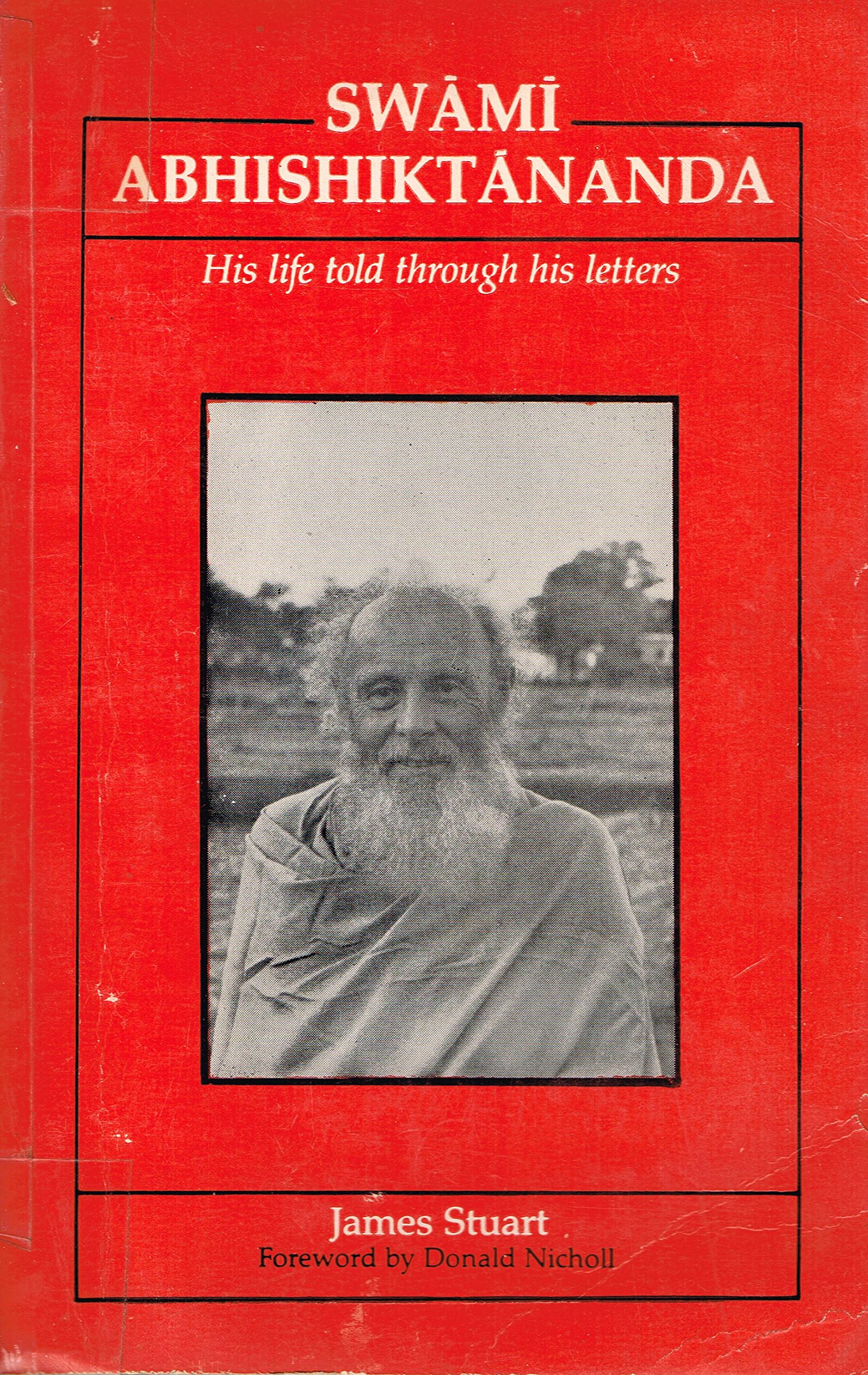
Swami Abhishiktananda (Dom Henri le Saux OSB) was a complex but enthralling spiritual pioneer, seeking to marry the paths of a Hindu advaitin and a Christian monk. He lived this tension painfully and creatively, grounded in his own intense inner experience of the unity of all things in God. I offer these few words from a letter he wrote to his sister, Sr Marie-Terese le Saux, in May 1972 as a sort of manifesto for the transformation of the church he loved but which also frustrated him:
“The salvation of the Church and of the world does not lie in extraordinary apocalyptic situations, but in the simple deepening of the sense of the intimate Presence of God. This I know, and I burn to make it known, to communicate this inward burning which comes from the nearness – ultimately, a felt nearness – of God. Not by missions, not by words, not by visible forms – only an irrepressible, burning and transforming Presence; and his communication is given directly from spirit to spirit, in the silence of the Spirit. Truth is in humility and in what is not out of the ordinary.”
I might just adopt this manifesto for myself.
What’s with the guy in the dress? Some suggestions for a theology of vestments.
I recently heard a fellow priest say that she had never heard a convincing theology to justify the use of vestments in church. Needless to say, that made me think I should have a go. As someone who pretty much daily puts on a variety of vestments to preside at the Eucharist and at Evensong, it seems reasonable to think about what we’re doing when we put on priestly garments (other than fulfilling the promise we made to follow the canons of our church which require us to do so, dear nameless colleague!). So here goes.
My first suggestion would be a general one, which is about the identity and demeanour of the person presiding at the church’s solemn and joyful offering of worship to God. In putting on clothes that belong to an order of ministry rather than clothes that represent our personal tastes, we are giving ourselves in humility to the exercise of a ministry that depends not on our personality but on our calling and on the grace of God’s Spirit. This does not make us anonymous and does not obliterate our personality, but willingly sets the ‘constructed’ aspects of our identity aside while we express the representational role of the priest for the church which offers the Eucharist. The church’s priest wears the church’s clothes to offer the church’s sacrifice or praise.
My second general suggestion concerns the ritual aspect of this offering. Putting on special clothing to lead a corporate act of worship enhances that act with something that visually marks this time out as a departure from everyday business and is a participation in something timeless. The same argument can be made for sacred spaces set aside for sacred purposes. Vestments are an indicator of transcendence.
My third suggestion is more theological. St. Paul talks of being clothed with Christ (Galatians 3:27) and this relates to baptism. Priestly garments are a reminder of the baptismal garments in which we all were clothed to mark our incorporation into the cosmic Christ. Again, this is not an obliteration of our individuality but the incorporation of that uniqueness into the One who gives it to us in the first place.
None of this is about power, and yet it acknowledges that the messages sent by our clothing are powerful. Simple and beautiful priestly vestments point to the ‘something greater’ that happens when we offer all of human life to God, including the human artistry with which these garments are made. They say that life is for more than consumption. We could see this as a choice not to wear a label, but, instead, the simple robe of baptism which says that life is fulfilled when it is lived in the pattern of Christ, not when clothed with the patterns of exploitative human fashion.
Philosophies? Religions? Lives!

I love the writings of David Hinton, an American poet and translator of Chinese poetry. If you don’t know his work, Existence: A Story, I strongly recommend it as a way into understanding Chinese art. One of his latest projects is a translation of the collection of 48 koan we Zen types know as the Mumonkan (Wu-Men Kuan in Anglicised Chinese and ‘No-Gate Gateway’ in Hinton’s title). It is a Chinese collection from the 13th Century and is known to Western Zen practitioners in several translations, many with commentaries by contemporary Zen teachers.
I should get round to writing something about the koan themselves, as that’s far more interesting, but I was intrigued by a sentence or two in Hinton’s excellent introduction where he insists that the Ch’an teachers in whose intellectual world the koan came to their current form did not consider themselves to be ‘religious’ but ‘philosophical’ in their disciplined exploration of the Great Matter of life and death. This reflects a common question that often hangs around Western explorations of Buddhism: is it a religion? Well, that depends what you mean by that word. Some would restrict it to systems of thought and practice that include a belief in a supreme being or deity. This, however, reflects a Western bias based on the Abrahamic faiths and may also reflect a contemporary awkwardness in dealing with anything that looks like language about ‘God’. Anyone who is familiar with Mahayana Buddhism will confirm that it is not a stranger to metaphysical speculations or, indeed, deities, even if it does not posit a creating God who is infinite, ultimate and beyond the realm of ‘things’.
The question of Buddhism as a religion or not may well be in the ‘walks like a duck’ category of silliness but it opens up another related question: is Christianity a philosophy or a religion? Certainly, early Christian thinkers like Origen were not shy of claiming it as a philosophy and it seems likely that other ancient philosophical schools would look much more like ‘religions’ than the kind of ‘schools of thought’ that inhabit Western universities in modernity. They would have had practices, defining characteristics and patterns of belonging that we would more readily associate with religions. In the modern world, adherence to a school of thought might have little impact on how your live your life day by day unless you make a living by writing books about it. But a Buddhist monk’s entire life is committed to the investigation of the Great Matter through meditation, study, communal life, rules for eating, dress, ethical conduct…
Ultimately, it is of little importance whether you call something a religion or a philosophy. What matters is the way it shapes your life. I bow respectfully to anyone who commits themselves to a serious and disciplined inquiry into this whole business of being alive!
Holy Lives
Having just written about the need for more subtle approaches to talking about God, I feel that I ought to add a major corrective to that argument. It seems to me that any intellectual approach to commending Christian faith, even if it is set in the context of communal ritual practice and contemplation, is insufficient of itself to commend that faith to others. The only thing that can offer a compelling commendation of living faith is the visible transformation of human lives. Pope Francis has recently published a ‘call to holiness’ in his exhortation, Gaudete et Exsultate. In this inspiring and challenging text, he insists that ‘throughout the history of the Church, it has always been clear that a person’s perfection is measure not by the information or knowledge they possess, but by the depth of their charity.’ (para. 37) He also makes it clear that ‘God is mysteriously present in the life of every person’ (para. 42) and not only in the lives of those who attain perfection.
The key to a life lived towards holiness is a life lived in response to the call to love: ‘Jesus clears the way to seeing two faces, that of the Father and that of our brother or sister. He does not give us two more formulas or two more commands. He gives us two faces, or better yet, one alone: the face of God reflected in so many other faces. For in every one of our brothers and sisters, especially the least, the most vulnerable, the defenceless and those in need, God’s very image is found. Indeed, with the scraps of this frail humanity, the Lord will shape his final work of art.’ (para 61)
Did Christianity Create Atheism?
I frequently puzzle about the rise of atheism in this peculiar corner of the globe – it’s a professional hazard – and while I’m sure it’s impossible to account for it in terms of a single cause, there must be some contextual factors that have led to this anomaly. Of course, some atheists would not see it as an anomaly but as the inevitable banishment of superstition by the triumph of scientific rationalism – a statement of pure faith if ever there was one. In global and historic terms, however, it is indeed an anomaly and one that seems to have greatest purchase in areas where there has been a significant historic presence of Protestant Christianity. It is, therefore, an anomaly that many of us in this western outpost of northern Europe face day by day but I think that Christians are best to avoid complaining about this phenomenon, at least until they get to grips with their own part in its appearance.
And so I have a simple proposal: atheism is, in part, a response to simplistic accounts of God. If Christians have given the impression that God is simply a bigger and invisible version of a human being, then atheists are quite reasonable in their rejection of God. If Christians give a simple account of the human response to divine will – God tells me to do stuff and I do it – then I would be at the front of the queue of those asking, ‘just how do you know that this is what God wants of you?’ And if we insist on the Creator simply being a rather more complicated sort of engineer, then it’s fair enough for aspiring human engineers to aim high and assume that they will eventually match the Creator’s ingenuity and do away with any need for him altogether. Of course, we should know very well that God is not a ‘maker’ but a ‘creator’, not an artisan but the Originator. Similarly, we should know that discerning the will of God is complex interaction of the human mind and heart with One whose mind and heart are not entirely knowable to us. But we fail to give a nuanced account of God because we fall into the trap of thinking that language about God works only on the level of how we give an account of any sensible phenomenon.
Language about God does indeed include the language of philosophy (though surprisingly few moderns and very few scientists are well versed in its subtleties and forms of argumentation) but also the embodied language of ritual and of wordless contemplation (wordless but not entirely uncommunicable). In other words, discourse alone is insufficient to give a suitably nuanced account of God. If we do not participate in the deeply symbolic and cumulatively effective language of practised religion, we are unlikely to get a sufficiently credible sense of who and what God might be. This, I guess, is the distinctive problem of some protestant accounts of religion that dismiss ritual or embodied practice and favour the word alone (not a problem for Pentecostalists though). They risk giving the impression that God is an object of inquiry like any other.
However, none of this is to suggest that we simply keep quiet about God unless people are prepared to take the whole range of religious language on board. On the contrary, it rather compels us to put the record straight on some of the impressions that we might have given while also insisting on the importance of ritual and embodied knowing. One thing it does require is that those who deal in traditional theological language let their voices be heard amid the louder voices of more simplistic accounts of God shaped by modern rationalist categories (by which I mean fundamentalisms of various sorts). The public square is famously inhospitable to complex ideas, but I think it’s worth trying, don’t you?
A Buddhist Take on Christian Humility

Humility features very prominently in Christian spiritual traditions as one of the most necessary of all virtues. A classic example of this in the Western tradition can be found in the 7thchapter of St Benedict’s Rule for Monks with its carefully described 12 stages. The Christian East is no less concerned with this most vital virtue. Here is one interesting example, from Diodochus of Photike’s Discourses:
When the irascible part of the soul is stirred against the passions, remember that it is time for silence- the hour of battle. But upon seeing that the upheaval is passing, be it through prayer or almsgiving, then it is the moment to let yourself be drawn by the ardent love of God’s words, affixing the wings of your mind to humility. For is a person does not humble himself exceedingly, he will never be able to speak of God’s greatness.
In Diodochus, humility is the necessary awareness of the inability of human intelligence to speak intelligibly of divine things – the things of God are beyond normal interpretive discourse. At times, the Christian tradition can seem to be saying that it is the inherent sinfulness of the human person that makes communion with God impossible and this can lead to the heavily value-laden judgements on human nature – we are simply too wicked, too undeserving, too base to be allowed into God’s presence. But I wonder if Diodochus is offering us a rather different angle. Might it in fact be the case that it is not our wickedness that holds us back from full awareness of God’s presence but the limitations of the ordinary workings of our minds?
An example from Buddhist tradition might offer a way into this rather different approach to humility. There is a traditional Buddhist teaching story that is included in an excellent little compilation of such parables by the Venerable Myokyo-ni called ‘Look and See’, published last year by The Buddhist Society in London. It goes like this:
King Milinda asked the Venerable Nagasena, ‘What is the difference between one who has passion and one who is free from passion?’
‘The one clings, the other does not cling.’
‘What do you mean by clings and does not cling?’
‘The one covets, the other does not covet.’
‘But as I see it, both he who has passion and he who is free from passion have the same wish, that, whether hard or soft, his food should be good; neither wishes for what is bad.’
‘He who is not free from passion experiences both the taste of the food and also the passion due to that taste; while he who is free from passion experiences the taste of that food, but not the passion due to that taste.’
In other words, the normal working of our minds often adds either desire or at least some level of expectation to the things we experience. We do not see things as they are but as we expect or desire them to be and this can lead us to a sense of dissatisfaction because we can say for sure that our desire will not be quenched by the experience of the thing we long for. The one who practices detachment from desire is thus enabled to experience things for what they are without expecting anything more from that experience. In that way, the food is tasted more purely and simply. The practice of learning how not to see things only in ‘my way’ is a practice of humility, but one which is simply conscious of the limitations of our habitual patterns of thought, not one which questions our fundamental value as human persons.
Diodochus may use the language of good and evil to describe our habitual patterns and, by contrast, a life lived in a godly manner, but his anthropology is fundamentally optimistic – it is quite within our reach to school our souls to be ‘readily disposed towards the good’. His method for doing this is not that far away from Buddhist practices of meditation and mindfulness – it is the constant remembrance of God through the prayer of the heart, through gratitude and through humility which is self-forgetting, not self-despising.
Christianity cannot stand alone
So said Dom Bede Griffiths in his book, The New Creation in Christ. This was a published version of his 1991 John Main Seminar in which he gave some of his clearest teaching on meditation. He recognised that, in a globalised world, religions inevitably had to rub up against one another but his concern was much deeper than the negotiation of inter-cultural encounters. His vision for Christian faith was a cosmic one (he would say simply a ‘catholic’ one) in which all people seek to ‘integrate their lives by bringing everything into the inner centre of the heart and finding the meaning of life, not in the external world, but in the inner reality of which the external world is a reflection.’ He considered the phenomenal world to be transient and that it may be transcended through a deep acquaintance with the fundamental reality of the Infinite. Such acquaintance is nurtured in the deeply human practice of meditation, a practice shared across religious traditions.
Of course, not everyone who meditates has an interest in exploring the realm of the infinite, but the religious traditions from which all forms of meditation ultimately derive are consistent in their insistence on this dimension of the practice. This is as true of Buddhism (which may be described as non-theistic, but only if you’re careful about what you mean by these terms!) as it is of any of the more straightforwardly theistic religions.
One of the big questions faced by any religious person who seeks to deepen their familiarity with another faith tradition is that of the nature of their encounter. Some suggest that there is a real possibility for multiple religious belonging, others seek a mutually illuminating dialogue. But one interesting attempt at a middle ground can be found in a conversation between Mark Vernon and Rupert Sheldrake, which you can listen to here. Vernon suggests a kind of ‘crossing over’ to another tradition in order to return to one’s own with a new insight. Many of those Western Christians who have looked to the East for religious inspiration have found that their immersion in the worlds of Hindu or Buddhist thought and practice have brought to light forgotten aspects of Christian spirituality. William Johnston is a fine, if slightly overlooked, example of this phenomenon which we might more readily associate with Bede himself or with Merton, Abhishiktananda, Tony de Mello or Enomiya-Lassalle. The chief gain for Western Christianity has been, I would argue, a reappropriation of Christian traditions of meditation which might otherwise have remained very marginal to our practice of Christian faith.
This project seems to me to have a lot of life in it yet, though I wonder if the early enthusiasm of the first generation of inter-faith explorers has been sustained. There are notable Christian voices still exploring this realm – Paul Knitter and Ruben Habito come to mind – but I wonder if there has been something of a reaction against this approach in favour of a more inward-looking emphasis as Western Christianity faces a decline in contrast to global trends in the opposite direction. I feel strongly that this is a poor response to a decline which masks a consistently strong demand in our culture for authentic spiritualities that are rooted in practice and open to other influences. It is interesting that the energy for such an approach appears to lie on the fringes of the church rather than at its heart (Russell Brand is a powerful advocate for this). We might do well to listen to these ‘fringes’!
 Point Vierge