Patience – The Faithful Doctor

One of Kierkegaard’s least know works is his Upbuilding Discourses, presented as a series of sermons and, unusually, published under his own name.

Søren <>

I was involved a few years ago in a book which presented these discourses in the form of dialogues. They were reworked by George Pattison, a theologian and Kierkegaard specialist, and Helle Moller Jensen, a Danish Lutheran priest and theologian. George’s own version of the original discourses can be found here. One of the dialogues was title ‘Learning Patience’ and it seems rather relevant at the moment. My own contribution to the book was to offer a pastoral response to the dialogues and I summarised the main images of patience from ‘Learning Patience’ as these:

  • The weapon of the weak. For many people in constrained circumstances, the exercise of patience can be a way of gaining some autonomy in the face of apparent powerlessness – putting up a bit of resistance, as it were.
  • Finding the eternal in us. When we are put in a position where we have to settle in for the long haul, how do we find a lasting awareness of what it is that endures beyond the circumstances we are currently in?
  • The Faithful Doctor. This is a lovely expression of Kierkegaard’s. He personifies patience as one who has ministered to others and can minister to us. Personification of virtues or skills is a way of recognising that they have a life beyond our own abilities to master them – they have served others well and we can borrow them for a while.
  • An Angel guarding the borders of human experience. Another personification of a ‘strong one’, an angelic helper who patrols the borderlands of what we can manage and, perhaps, one who can bear witness to our struggles, giving them recognition and honouring them.

Here’s one section of ‘Learning Patience’ to finish with:

When it comes to being who you are, it’s no good rushing at it or battling your way forward, and even if you’re living through a time of crisis when big decisions and heroic actions are being called for, you can only every find your self quietly and patiently. In fact, the quieter you are about it the better!

Sermon for Lent V

It may seem odd to us that, as we turn our attention towards the cross on this first day of Passiontide, we have two accounts of being raised from the dead. But this shouldn’t be too strange for us. People of faith, over many millennia, have discovered that the presence of life in the midst of death is not unusual. Indeed, we have discovered that the only way to life is through a kind of death; dying to self, relinquishing our ideas about what we had thought to constitute life, learning to live with constraints, learning to find freedom where choice is limited. I might go so far as to say that the discovery of life through dying is the heart not only of our religion, but of human experience at its deepest. There is no way to life that does not require a radical letting go; and if we do not find a true understanding of the constraints that face us, we will not find a way through to a fuller life. Christianity is, I believe, not idealistic, but utterly realistic in facing human reality as the only way to realise its transformation. That is what these days of Passiontide invite us to. That is what these days of pandemic crisis ask of us. They ask of us that we do not find paralysis in this difficult time, but hope and love. Nothing can defeat love. And if today’s account of the raising of Lazarus is about anything, it is about love. Jesus wept over his lost friend and they said, ‘see how much he loved him.’

Our two images from today’s two readings challenge us to confront the reality of what we face in this current crisis and three images from the world of art help us to see these realities in their specific detail. I’ve put them on my blog, which you can access from the OSP website if you’d like to see them for yourself. In the Ezekiel reading, we see an image of lifeless, desiccated fragments of what were once human bodies. In a rare example of Jewish representational art, a fresco from the 3rd century synagogue of Dura-Europos in modern-day Syria depicts this scene and shows the dry bones not as skeletal remains but as disconnected body parts. On one level, it is gruesome but on another it is profoundly moving. It shows that the real trauma for us human beings is in separation, in dismemberment. We do not thrive, we do not live when we are not connected to one another. Fragmentation is a major source of suffering for us and there is a risk that our necessary isolation in this current situation could lead to some degree of fragmentation. There is a risk that our anxiety could lead to a focus on our narrow concerns for our own wellbeing and lead us away from a commitment to the common good. In Ezekiel’s prophecy, however, life returns when fragmentation is replaced by connection, when there is a re-membering of the parts that have been severed. In the current situation that means contact, compassion, awareness of each other, selfless love.

Turning to our Gospel story, let me describe the scene as depicted by the early 14th century Italian master, Duccio. His painting of the raising of Lazarus shows him standing erect in the opening of a tomb but bound very tightly by his grave clothes, like a mummified body. A crowd stands to the left of the scene. One man is embracing the stone that had sealed the tomb. Most turn to face the risen Lazarus with astonishment and some with disgust. Mary and Martha, however, face Jesus. It is entirely faithful to the fourth evangelist’s account and leads us to the threshold of the moment of true liberation when Jesus, having already called Lazarus to come forth, now calls for him to be unbound, to be set free from his constraints. His life is not just about breathing again, but about being released from all that diminishes him.

Again, this rings true for us who currently face considerable constraints on our normal activities. We feel as if we are in the position of Lazarus, waiting for a word of release to let us step free of our limitations. But we are in the place of Lazarus in Duccio’s painting, alive but restricted. But I wonder if Duccio has not found something profound in choosing to freeze his image at this moment in time. Lazarus is not yet unbound, but he is alive. We can find freedom even when severe constraints appear to limit our choices. In Duccio’s image, I see that freedom in the face of Lazarus, who looks out on the whole scene with a steady gaze which meets the gaze of Jesus. He connects, even while he is still bound. We, too, are free to look upon the world with loving connection, even from the four walls of our living room.

I want to mention one final depiction of this scene, which is by a later Italian painter, Sebastiano del Piombo. His Lazarus is not emerging from a rock-hewn tomb, but from the ground. He is not bound but in the very process of wriggling free from his bandages. His muscular body is shedding its bonds and even his big toe is doing its bit in peeling off the restraining cloths. Where Duccio showed a moment of freedom in the midst of constriction, del Piombo shows a surge of strength and an assertion of vitality. For me, at this point in time, this painting hints at a future hope of resurrection. It suggests an irrepressible life-force which cannot be contained. But something is amiss. No one in the large crowd can look at Lazarus, not even those helping him to undo his bandages. Not one. Except Jesus. He alone can bear to look in the eye one who was dead and see in him the vigour of life, for he is the one who knows that he, too, must undergo the darkest of days before he can embrace the eternal light.

In him is our life, our hope, our consolation and our strength. In him is the promise that the full vigour of life will not be destroyed. In him is the willingness to look upon that which seems unbearable and see it through to the light of Easter’s dawn.

Sitting Still

I spoke the other day about one of the three key elements of meditation practice – attention to the breath, a healing breath. One of the others is sitting still. This seems like an easy enough thing to do, and in the current circumstances, there seems like little else we can do, but it does need some practice for most of us! There’s an excellent little mediation book for kids called ‘Sitting Still Like a Frog’, but I’ve always found encouragement in stillness from another water-loving creature – the heron.

Image result for heron standing in water

Of course, they stand rather than sit but the stillness they achieve is stunning. The stillness is preparation for action – specifically hunting in the case of the heron – and for the meditator, the action that flows from stillness is simply our daily life, which, the more we practice, is not really separable from stillness. It’s rather like the ‘praying without ceasing’ so sought after by the Russian pilgrim in The Way of a Pilgrim – one’s whole life becomes prayer because it is thoroughly embodied.

Back to the business of sitting still. The first thing it needs is stability, which is why a cross-legged position has such a lot to commend it. It provides a stable tripod for the body and, as long as you’re raised a little on a cushion, allows for diaphragmatic breathing. It pays to sway around a little before you start so that you find a balanced point and so that you eliminate any potential cramps early on. I use quite a thick mat below the cushion, which I find gives more support to ankles. If you’re sitting on a chair, it’s best not to rest your back on the chair back and you can use a cushion or wedge to get the height right. Having a straight back and neck allows for freer breathing.

Another element of traditional zazen is to keep one’s eyes open. I found this difficult at first, having been used to meditating with closed eyes, but as time has gone on, I find it less distracting – fewer spiralling thoughts take hold when I’m not turned inwards. The important thing is to be looking around but resting the eyes downwards at a point not too far in front of you. Many Soto Zen practitioners face a blank wall and that can help to reduce distractions too.

There is also a tradition of standing to pray contemplatively and this is often the posture used by those who pray the Jesus Prayer together. The same principles apply – balance, stability and stillness. It really is true that stability of body is connected to stability of mind and mental agitation can be addressed by bodily stillness.

I conclude with Norman Fischer’s excellent rendering of Psalm 131 – the contemplative’s psalm par excellence:

YOU KNOW THAT MY HEART is not haughty
nor my eyes lofty
Neither have I reached for things
too great and too wonderful for me

But I have calmed and settled my heart
And it is contented

Like a child surfeited on a mother’s breast
Like a suckling child is my heart

Let those who question and struggle
Wait quiet like this for you
From this day forth
And always

Isolation? No Separation!

Isolation and distancing are cold words that have entered our vocabulary of late, but are they truthful words? In keeping behind our own doors do we really find ourselves to be separate from others? Does the silence of these days speak of how we are apart, or does it rather invite us to discover how true it is that we are not separate from each other?

In many ways, this period of staying at home underlines the truth of our connectedness. Indeed, the only reason we are doing this is because we are connected to each other, because our actions have an impact on others. This time invites us to realise ever more fully what it means to overcome our sense of division, to realise our interdependence. Christianity speaks of communion, Zen Buddhism of non-dualism. The Jesuit Robert Kennedy, in his recently revised book, Zen Spirit, Christian Spirit, quotes a couple of sentences from John Wu’s The Golden Age of Zen:

When all things return to the One, even gold loses its value.
But when the One returns to all things, even the pebbles sparkle.

Kennedy goes on to say that ‘the One is contained whole and entire in each fragment of all things’ and shows how, for the Christian, this is manifested in the Eucharistic presence of Jesus, whose presence is not diminished by being divided at the fraction of the bread. This realisation has profound implications for us at this time. It reminds us that we are present to each other because we are united in the One. It reminds us that our service to the hungry, sick and imprisoned is a service to Christ himself. And it reminds us that when one offers the Eucharistic sacrifice, all are in communion because all are present. Of course we want to be back in the place where our physical closeness expresses our fundamental non-separation, but for now we express our non-separation through our physical distance.

One of the ways we collapse that distance most effectively, or rather, we collapse the illusion of our distance, is by sitting in silent meditation. We can do this simultaneously – why not agree a time with some friends? – and our rapid education in online contact also aids this shared practice. I’ll be offering more such opportunities in due course so please watch this space!

Lent 4 Sermon

I’ve never been in the Apostolic Palace in the Vatican (though I remain open to invitations in due course) but I understand that part of the experience of visiting is to walk through a corridor that would once have been open to the outside world on one side – the loggias – and is decorated with some wonderful frescoes painted by Raphael’s team of willing accomplices. If you take your time in your saunter through these corridors, you can look around and up and see some marvels of renaissance art. At one point in that hypothetical saunter, you may look up and see four scenes from the life of David, the King of Israel whose exceptional gifts and exceedingly normal humanity stand as a pivotal moment in the development of religious faith that leads to where we are now as a Christian community founded on the witness of many generations of Jewish ancestors. In one of these scenes, David is being anointed by the prophet Samuel. We heard that story just a few minutes ago. He was not the obvious choice – not the tallest, not the oldest, not the natural heir, but something about him compelled the prophet to see in him the promise of reinvigorated life for the nation, the promise of a deepened faith and a renewed national identity. There was a depth and a potential in him that exceeded all superficial assessments. He is a handsome young man, but that’s not it. There’s something about the quality of his inward life that catches the eye. He has something that is not visible at first but is there for those who want to see it.

In the fresco, he is turned inwards, not asserting his place as the brightest or best, but concerned with greater things. He does not look up with a confident assertion of his rightful place as the successor to a failing king, but looks inwards with the urgent desire of one whose sense of the world will find expression in songs that we still sing, psalms that speak of loss, anger, hope and faith. This, I think, is what the text means when it urges a concentration on the heart rather than on outward appearance. David, for all the human frailty that we will soon encounter in him, is one who understands that true value in life does not consist in success or prowess but in insight and awareness.

In Raphael’s fresco, David is depicted in the moment of receiving an anointing that is nothing less than the gift of the Spirit of God. Samuel holds aloft the horn of oil, which occupies a physical space between the outside world and the room in which the encounter occurs, right on the edge of the window that opens out into the world beyond, and suggests a bridging of that gap between seen and unseen, known and unknown. It’s as if to say that the things of God, the things of ultimate value, are here held in a poise, available to those who are able to see, obscure to those who seek only the power dynamics of conventional political discourse. David does not offer only a word of strong political leadership, but a word of deep insight into the human condition; loss, hatred, hope, trust, rescue, fragility, promise. David here is the shepherd-poet as much as the warrior-king.

In a similar way, today’s Gospel reading offers a chance to see one who transgresses the boundaries between what is seen and what is known in a deeper way. The man born blind is pitched into a verbal tussle with the Pharisees, religious sticklers who cannot see beyond the set roles of a binary contest between the observant religious practitioners and those who claim to have encountered the living God. They cannot see what is in front of their eyes – a man who has experienced liberation and acceptance. All they can see is a man who is prepared to accept the ministrations of an unauthorised teacher who sits light to the ritual dimensions of the law. They cannot see the insight of the once-blind man because he does not fit the pattern of religious conformity. But the healed man is straightforward in his insistence that he knows what he is speaking of – his eyes have been opened, he has received a life-giving gift. God’s goodness is not constrained by theological presuppositions. The healed man does not see in terms of a judging mind that sees only what it expects to see. His vision is far greater than that. He sees life when others see only transgression.

For this fourth Sunday in a series of planned discussions, I suggested a theme of vocation – the question of what it is we are called to be as a church and as individuals. The anonymous man in today’s Gospel and David’s anointing in our first reading offer a unanimous response to that question. We are called to be those who see things differently, who do not judge by limited standards but see clearly what is life-giving. We are called to be those who look out on the world without any preconception of what we might find there, but are open to the possibilities of goodness and truth. We are called to see value in those who do not measure up to standards of excellence or achievement. We are called to see beauty in those who don’t fit. We are called to see possibility in those who have already been written off. We are called to see eternity in lives that barely register on the scale of human accomplishment. We are called to see God in the experiences of those who despair or are lost.

What does this calling ask of us in the circumstances we face at this time? It asks that we look and see lives that might otherwise be ignored. It asks that we forget status and see Christ in the lowliest. It asks that we set our scales by a measure of vulnerability, not invincibility. It asks that we find value in caring rather than in winning. It also asks that we nurture the interior, hidden life that will sustain us through this challenging time. May God bless us with insight and compassion in these days.

Entering the Desert

As expected, the Scottish Episcopal Church has now suspended all public worship until further notice. For local congregations, this means that we must find new ways of maintaining our life as a community of faith by offering care, support, prayer and worship in ways that will draw on all our creative resources.

Many have commented that, especially as we’re already in the time of Lent, we are entering a spiritual desert, by which I mean that we are entering a privileged place of spiritual opportunity, a place of interiority and trust, a place where external characteristics of religious observance are largely stripped away. Our spiritual ancestors knew this place well and we can still draw on their wisdom, whether it’s the monastic pioneers of the deserts of the Middle East, the medieval Carmelites or modern explorers like Charles de Foucauld or, in a more interior sense, Simone Weil. But there are also fellow-travellers from other traditions, and as we begin this new phase of desert life, I offer one such companion – the poet and translator David Hinton.

Image result for david hinton deserts

Hinton is best known for his work in translating Chinese poetry and religious (Taoist and Buddhist) texts but he also writes his own poetry and prose reflections on the natural world. He has a lovely sequence of poems about the deserts he knows best in the West of the United States. Like all good desert explorers, he knows that there is no real division between the inward and outward deserts – one intensifies our awareness of the other. I offer a couple of excerpts:

Empty mind
is a mirror
gazing our, the old
masters say. It
seems easy

enough. But all
night long, stars shimmer
light-years
deep in my gaze. Who

could be that

vast? And at dawn
I’m sure
it’s not me

mirroring
desert, but wide-
open desert
mirroring whatever

it is
I am.

And here’s another one that appeals to me:

Yellow sky-
parched grasses
and sky. The less

this desert
is, the more I

want to live my life
over again. Ideas

confuse
me. They
leave every-
thing out.

It seems to me that we can trust this time of desert wandering to be a teacher for us. More than that, we can trust that it is also holy ground, a place where the Eternal meets us and invites us deeper into the mystery of I Am.

Lenten Bodies

Image result for schmemann great lent

Alexander Schmemann’s wonderful book on Great Lent has a gem of an insight into the embodied character of what we do in Lent:

Christian asceticism is a fight, not against but for the body.

The body, he says, is ‘glorious’ and ‘holy’ and Lent is a time for the restoration of the whole person so that we recognise the true purpose of our bodies, which is ‘the expression and the life of spirit, the temple of the priceless human soul’. For Schmemann, the best expression of this reality in the time of Lent is through the repeated prostrations that characterise the Prayer of St Ephrem. While this may look like an act of abasement, I think it feels rather different – more like an act of grounding, of humility, of contact with the earth from which we are made. It also feels like an act of centring, of gathering our scattered selves together into one. This perfectly expresses the Prayer of St Ephrem’s contrast between sloth and despondency on the one hand, and chastity and humility on the other. Our greatest weakness as human beings is not so much malevolence as the dissipation of our minds and energies. Busyness, neglect, inattention and timidity are far more dangerous to us than the more obvious candidates. And neither is the remedy spectacular: it is a gathered mind, a reconnection of body and soul, the practice of attentiveness and a quiet resolve. Schmemann suggests that these characteristics are aided by the monotony of Lenten worship. It’s not often that you hear anyone praising monotony in worship, but I think he has a point! Lent is an opportunity to turn down the spiritual temperature of worship and prayer, to tone down its colour, to emphasise simplicity and repetition so that worship ceases to be a source of ‘interest’ and becomes instead a vehicle for recollection and quiet stability of mind. All of this is helped by some simple physical practices such as the understimulation of our senses of taste (a simpler diet) and hearing (plainer music in worship), the prostrations in prayer that we already mentioned and the daily practice of stillness in prayer – we choose to stay put in the face of whatever reality comes our way. In a curious way, these practices form not only a preparation for the feasting of Easter, but also a foretaste of the Paschal life, for we undertake the journey to Pascha as those who are already one with Christ in his resurrection through our baptism. The practice of Lent is a workshop in which we hone the skills of that paschal new life in which we are restored to ourselves, body and soul.

A Monk’s Manifesto

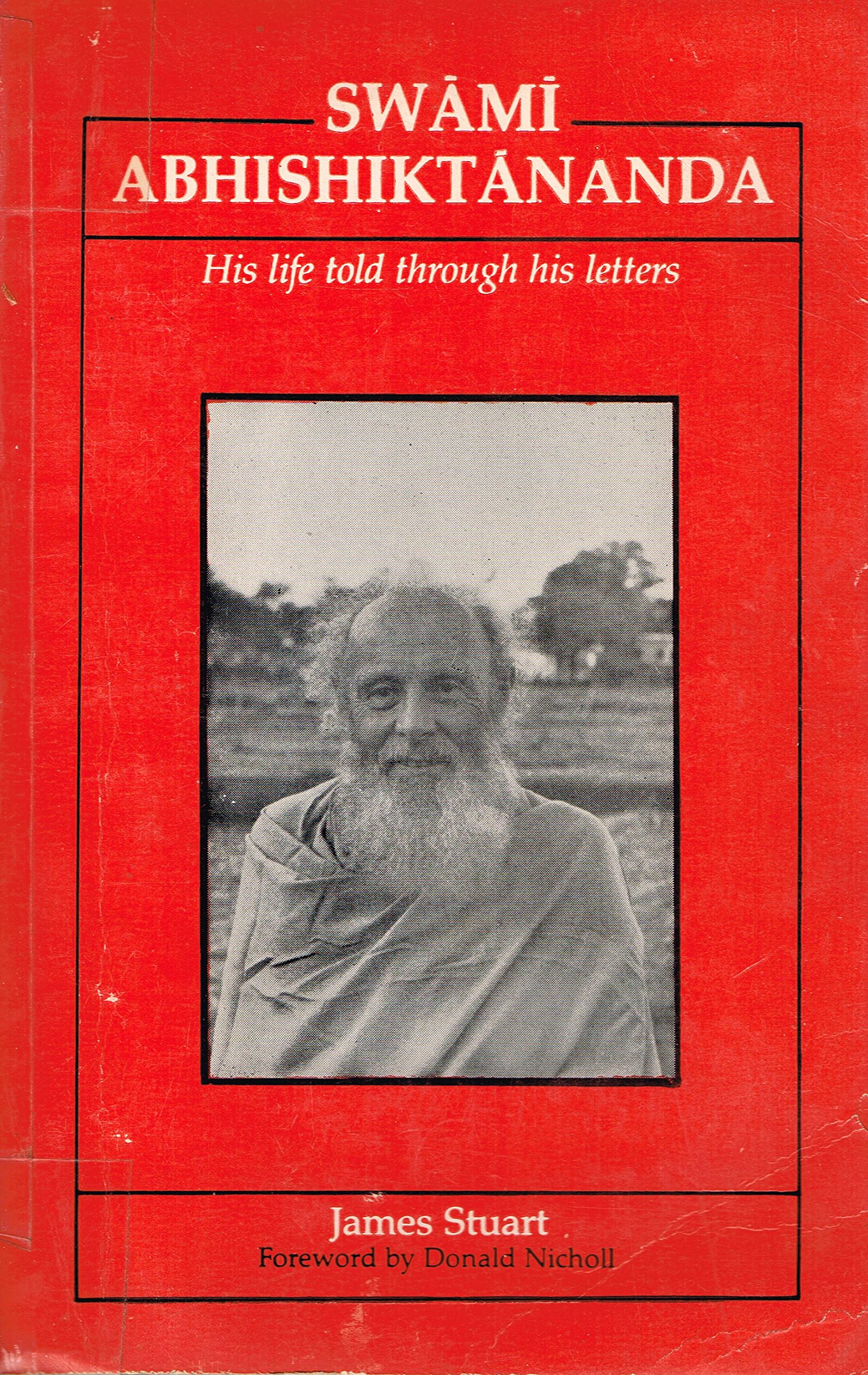
Image result for swami abhishiktananda james stuart

Swami Abhishiktananda (Dom Henri le Saux OSB) was a complex but enthralling spiritual pioneer, seeking to marry the paths of a Hindu advaitin and a Christian monk. He lived this tension painfully and creatively, grounded in his own intense inner experience of the unity of all things in God. I offer these few words from a letter he wrote to his sister, Sr Marie-Terese le Saux, in May 1972 as a sort of manifesto for the transformation of the church he loved but which also frustrated him:

“The salvation of the Church and of the world does not lie in extraordinary apocalyptic situations, but in the simple deepening of the sense of the intimate Presence of God. This I know, and I burn to make it known, to communicate this inward burning which comes from the nearness – ultimately, a felt nearness – of God. Not by missions, not by words, not by visible forms – only an irrepressible, burning and transforming Presence; and his communication is given directly from spirit to spirit, in the silence of the Spirit. Truth is in humility and in what is not out of the ordinary.”

I might just adopt this manifesto for myself.