
Most of us are temperamentally cautious about things that are described as ‘artificial’ – sweeteners and additives come to mind, or smiles, or grass – and we have a hunch that they might not only be a diminished form of the real thing, but possibly also harmful to us. Might this also be true of the phenomenon we are calling ‘artifical intelligence’? Despite an overwhelming enthusiasm for this phenomenon from people who stand to make rather a lot of money out of it, and, indeed, those whose support for it is tied up with political power, does the instinctive resistance that many of us feel have something of value to say to us?
I feel ill-euipped to speak intelligently about AI because I do not use its more obvious manifestations, but none of us, or at least none of us who are digitally connected in any way, are untouched by its increasing reach.
My first concern, that artificial things probably don’t measure up well against the real thing, is seen most clearly when AI is used to generate artefacts that are more normally the product of human imagination and craft. To ask whether the AI version of a song or an image is ‘better’ than one made by human hands is the wrong question. Surely, the question is ‘why do you want to have a machine do something that brings joy, purpose, meaning and expression to human life?’ And why would one want to have a machine create something that lacks the flaws, bumps, cracks, idiosyncracies and imperfections that give texture and truth to the real thing? I have no doubt that some generative AI system could add these in for you, but they would be, by nature, false, planned, cynical. I fear that the only answer I can find to the question of why one would want to do this is that the mass production of cultural ‘content’ that AI allows rewards the tech company. Human creativity, by contrast, is slow, inefficient, hard to monetize.
My second range of concerns, that AI might actually be harmful to us, belongs more to the realm of human consciousness. In particular, the way AI operates is based on a reductive understanding of intelligence as the processing and accumulation of bits of information. It is the ultimate triumph of reductive rationality to banish the unpredictable elements of human feeling and intuition from the process of knowing. But it also lacks the capacity in human consciousness for knowing how the parts fit into the whole, and lacks the vital element of judgement that comes into play when weighing up one thing against another in terms of its importance or relevance. Quite literally, it sees everything and understands nothing.
This manifests itself in the use of AI in diagnosis of disease, where the clinicians skill, experience and empathy are as vital as measurable data, if not more so. AI does not ‘have a feel‘ for something that is out of sorts in a person’s illness.
I have no doubt that there are some mechanical things that AI can do better than fallible human beings, and it may be that autonomous vehicles will be an example of that. But there are some very human things that AI will never be able to replace, however effectively and efficiently it may seem to replicate these human practices. One very powerful example of such a practice is prayer. Of course an AI chatbot can produce a prayer, but it simply cannot pray. It has no soul with which to reach out to God, no unmet desire that drives it to seek the Ultimate. Above all, it cannot love. Your chatbot can say that it loves you, but cannot feel your pain, it cannot weep at your sorrows, it cannot die for you. AI’s inability to suffer is what makes it less than, not more than human.
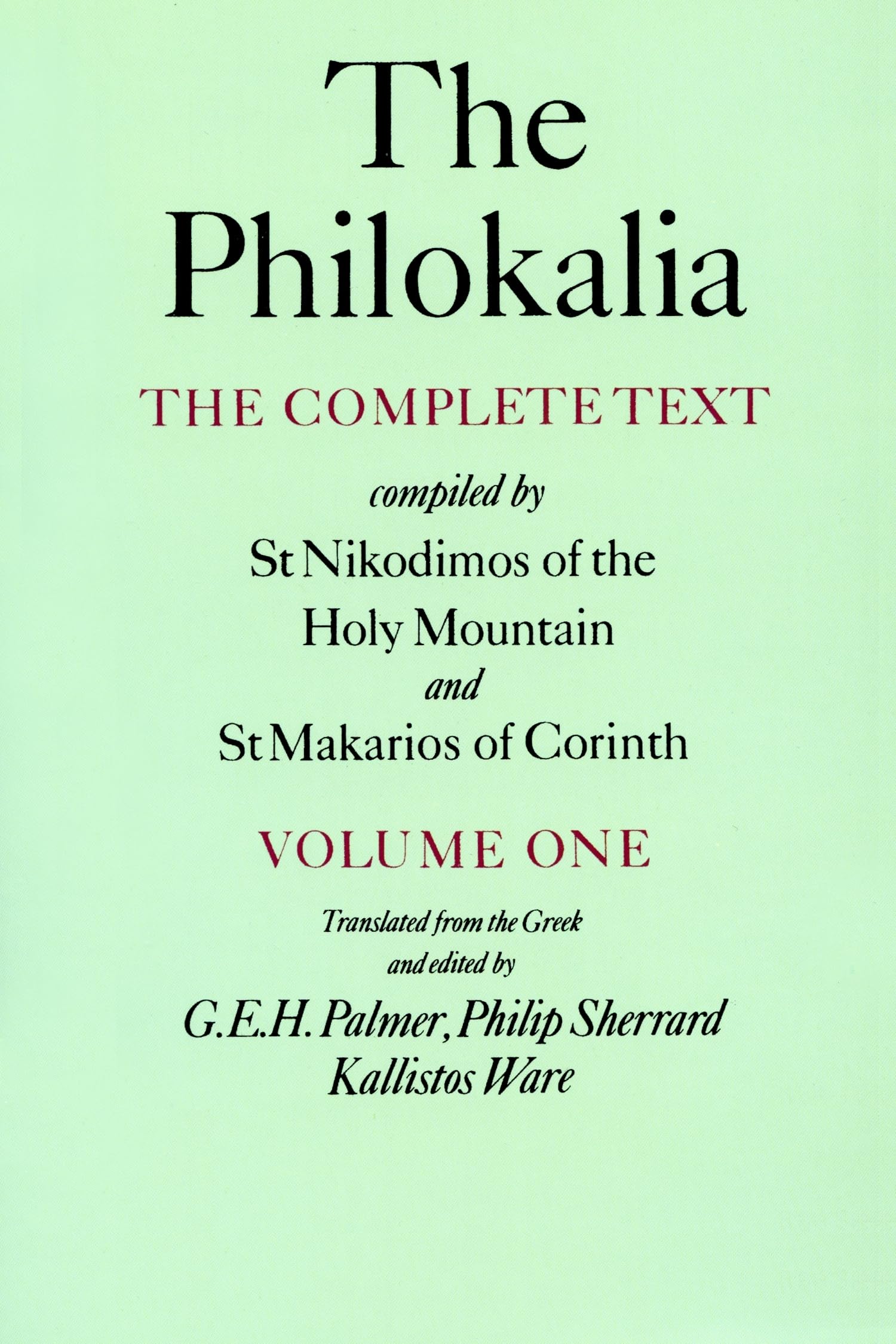
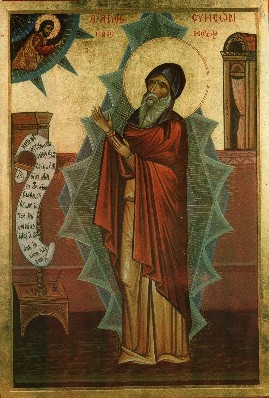
But enough of the negativity! The truth is that wherever there is something artificial, there is usually something much better – the natural and original version. And in the case of intelligence, the natural intelligence that AI cannot replace is not the focussed, counting, data analysing kind, but the imaginative, meaning-making, intuitive kind. AI is very much a version of the brain’s left hemisphere and whenever it appears to be demonstrating the right hemisphere’s activity, it is merely producing a facsimile of it based on the agglomoration of many instances of its outputs. Or, to use a more traditional way of describing it, AI lacks nous. This spiritual intelligence is what reaches out beyond us, transcends the mere surface of things, and perceives the Ultimate. AI, as a response to the restless desire at the heart of humanity, seeks efficiency and the elimination of friction. The nous, our natural mind, knows better: our restless minds can find rest, but only in the One who made us for himself, one who descends into the depths of human suffering to transfigure it. That pattern of healing only through love-to-the-point-of-death is something AI can never know.



 Point Vierge